中文版 · English
Getting in
Over a million people applied for the JLPT in one December sitting. The exam Japanese universities built for admissions is held in thirteen countries.
The JLPT is the exam the world knows. It runs in 81 countries and 247 cities. The exam Japanese universities created to replace it for undergraduate admission runs in 13 countries and 20 cities, every one of them in Asia — and nearly three-quarters of the people who sit it are already living in Japan when they do. That gap is not a detail. It is most of the reason the route into a Japanese university looks the way it does.
If you have thought about studying in Japan you have heard of the JLPT, and you have probably heard that you need N2, or N1, or that N3 will do for some places. All of that may be true for your particular school. But the exam is not the gate most Japanese universities built, and knowing which exam is which changes what you should be doing with the next year.
The famous one, in numbers
The Japanese-Language Proficiency Test ran its second 2025 sitting on 7 December 2025. It was held in all 47 prefectures of Japan and in 247 cities across 81 countries and regions. Inside Japan it cost ¥7,500.
The application counts:
| December 2025 | Inside Japan | Outside Japan |
|---|---|---|
| Applied | 447,285 | 589,095 |
| Actually sat it | 402,228 | 474,256 |
| Passed | 111,091 | 186,491 |
| Pass rate | 27.6% | 39.3% |
1,036,380 applications for one sitting — that addition is ours — and 56.8% of them from outside Japan. There is no other Japanese-language exam remotely this size.
The pass rates by level are worth looking at before you plan around them, because they are lower than most people assume:
| Level | Pass rate, in Japan | Pass rate, abroad |
|---|---|---|
| N1 | 24.0% | 34.2% |
| N2 | 25.4% | 40.9% |
| N3 | 26.2% | 37.5% |
| N4 | 33.6% | 35.3% |
| N5 | 53.5% | 50.0% |
Three out of four people who sat N1 in Japan did not pass it. And at every level except N5, the pass rate is lower inside Japan than outside it. We do not know why, and we are not going to guess — the published figures do not say who sits which exam where, and any explanation we offered would be a story rather than a finding. We note it because it is the opposite of what most people expect.
The exam that replaced it
Here is the sentence that reframes the whole question. It is JASSO's own description of why the EJU exists — we translate it closely:
The Examination for Japanese University Admission for International Students is the successor to two examinations that most Japanese universities and other higher education institutions had required of applicants: the Japanese-Language Proficiency Test, and the General Examination for Foreign Students (discontinued after its December 2001 sitting). It has been held twice a year, in June and November, inside and outside Japan, since 2002.
日本学生支援機構「日本留学試験(EJU)とは」, retrieved 7 August 2026. Our translation.
So the JLPT was not left behind by accident. For the specific job of admitting undergraduates, the universities and the ministry built a different exam and moved to it, nearly a quarter of a century ago. The JLPT continues, at enormous scale, doing other things.
And the EJU is not a language test. Its subjects are Japanese as a Foreign Language, Science (physics, chemistry, biology), Japan and the World, and Mathematics. You sit whichever ones the university you are applying to specifies.
The part almost nobody mentions: you choose the language of the question papers when you apply. Japanese or English. The Japanese-language paper is in Japanese, necessarily — but the science and the mathematics can be sat in English.
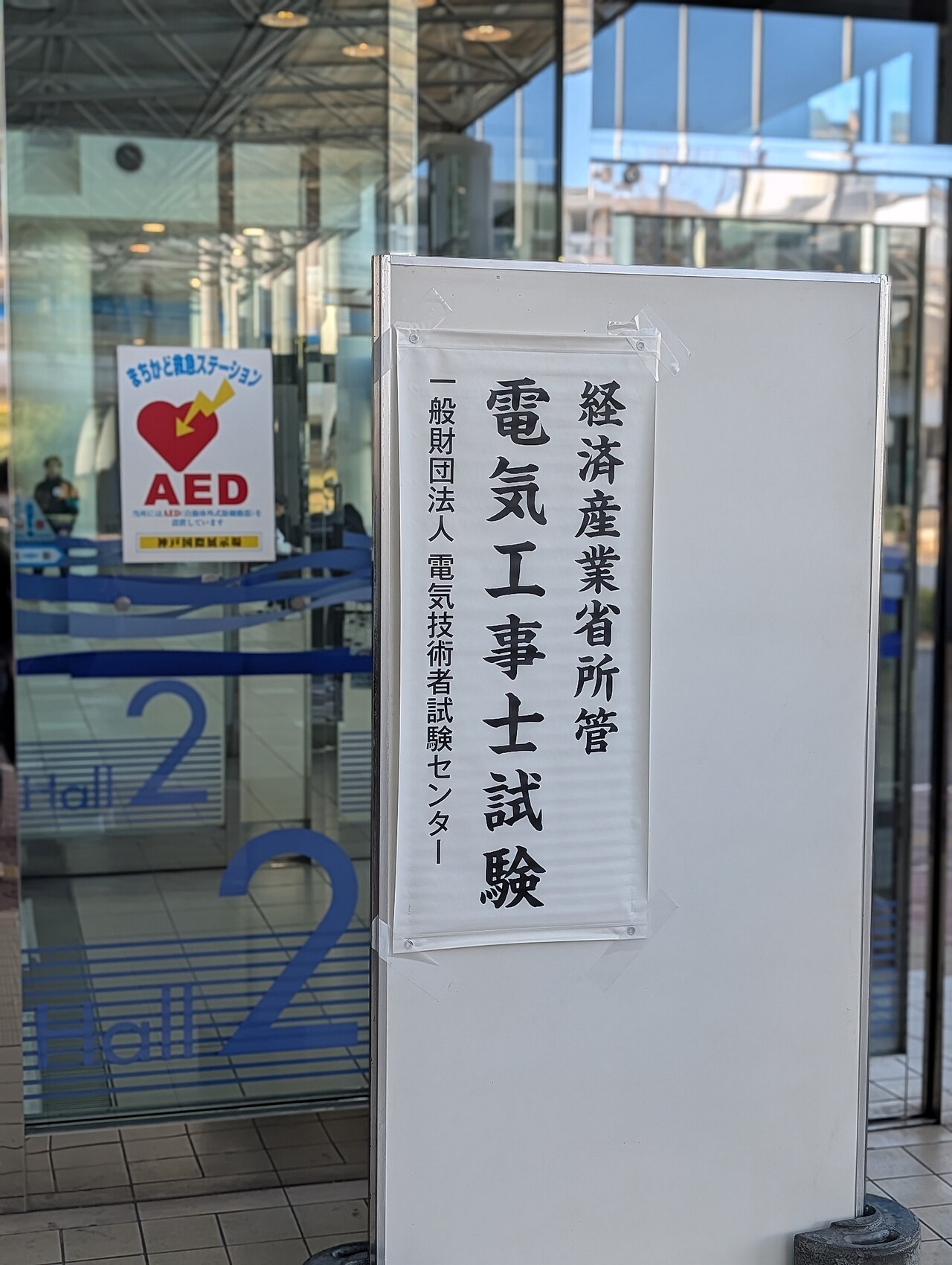
Thirteen countries
For the first 2026 sitting, the EJU was held outside Japan in these places, and nowhere else:
India New Delhi · Indonesia Jakarta, Surabaya · South Korea Seoul, Busan · Singapore · Sri Lanka Colombo · Thailand Bangkok, Chiang Mai · Taiwan Taipei · Philippines Manila · Vietnam Hanoi, Ho Chi Minh City · Hong Kong · Malaysia Kuala Lumpur · Myanmar Yangon · Mongolia Ulaanbaatar
13 countries and regions, 20 cities. JASSO, 2026 first sitting, overseas venues.
Read the list again for what is not on it. No venue in Africa. None in the Americas. None in Europe. None in the Middle East. None in Central or South Asia beyond one city in India. If you live outside those thirteen places, sitting the EJU means an international flight, twice, because it runs in June and November.
Who actually sits it
The June 2026 sitting:
| EJU, June 2026 | Examinees |
|---|---|
| Inside Japan | 19,482 |
| Outside Japan | 7,406 |
| Total | 26,888 |
72.5% of the people who sat the EJU were already in Japan — our division. Compare that with the JLPT, where 56.8% of applications came from outside. The two exams are pointed in opposite directions.
This is the mechanism, not a coincidence. The exam that gets you into a Japanese undergraduate programme is mostly sat by people who are already here — which in practice means people on a language school visa. It is the same shape we found in the census: 41.5% of international undergraduates went through a Japanese language school first. The exam geography and the route statistics are describing the same thing from two directions.
946 schools use it
JASSO publishes the count of institutions that use EJU results in admissions. As of June 2026:
| Institution type | National | Public | Private | Total |
|---|---|---|---|---|
| Universities | 77 | 60 | 368 | 505 |
| Vocational schools | 0 | 2 | 212 | 214 |
| Junior colleges | 0 | 9 | 78 | 87 |
| Graduate schools | 8 | 15 | 58 | 81 |
| Colleges of technology | 51 | 0 | 0 | 51 |
| Professional universities | 0 | 0 | 5 | 5 |
| Others | 0 | 2 | 1 | 3 |
| Total | 136 | 88 | 722 | 946 |
JASSO's list is not just a list of names. It records, for each school, which EJU subjects it requires and which language of question paper it accepts. That is the document to open once you have a shortlist, because it answers "what do I actually have to sit" without writing to anybody.
266 will decide before you arrive
This is the part that is genuinely hard to find in English, and it is the most useful thing on this page.
Some Japanese institutions will admit you on your EJU score and your school record alone, without you sitting an entrance exam in Japan and without you travelling. JASSO calls it pre-arrival admission and publishes the list, along with the score each school looks for.
Pre-arrival admission
Institutions in total — 112 universities (24 national, 4 public, 84 private), 83 vocational schools, all 51 colleges of technology, 9 junior colleges, 6 graduate schools, 5 professional universities.
Where the flight goes
If the school is on that list and you can reach an EJU venue, the only flight you need is the one you take to start studying.
Twenty-four national universities are on it. So is every one of the 51 kōsen — the five-year colleges of technology, which start at fifteen or sixteen and which almost no English-language guide to studying in Japan mentions at all.
So what should you actually do
- Find out which exam your shortlist wants, before you buy a textbook. The answer is in JASSO's user-school list and in each university's own admissions document, and it is frequently the EJU rather than the JLPT.
- Check whether there is an EJU venue you can reach. Thirteen countries. If none of them is yours, that fact belongs in your plan from the beginning, not discovered in your final year of school.
- Check the pre-arrival list before you assume you have to come and sit an exam. 266 institutions.
- If you are going the graduate route, none of the above is the main event. Graduate admission in Japan runs through the laboratory, not through a standardised exam — that is a different problem.
What we are not saying
- The JLPT is not useless. It is used for immigration points, for professional qualifications, by employers, and by some schools. We have not counted how many universities accept or require it, because we could not find a published figure — the absence of that number is itself part of why the picture is confusing.
- "946 schools use the EJU" does not mean the other schools do not exist. Many universities run their own entrance examinations for international applicants, and some use both.
- The pre-arrival list is self-reported. JASSO compiled it from a survey run between July and October 2025 and publishes only the schools that consented to appear. A school not on the list is not necessarily a school that will not do it.
- Counts move. The 946 and the 266 are dated. Check them against JASSO rather than against this page if the number matters to a decision.
- We have not sat either exam, and this is not advice about how to prepare for one. It is a description of which exam is used for what, and where.
Read next
Not sure which exam your school wants?
Admissions documents are often Japanese-only, and the subject and language requirements are usually in a table near the back. Send us the school and the programme. We will read the document and tell you what it asks for.
Ask one question →Free, once. No sales call afterwards.
JLPT figures. Japan Foundation and Japan Educational Exchanges and Services, Summary of the Results, December 2025 (2025年第2回日本語能力試験 結果の概要), and the corresponding statistics page, both retrieved 7 August 2026. The sitting was held on 7 December 2025 in all 47 prefectures and in 247 cities across 81 countries and regions; the domestic fee was ¥7,500. Applicant, examinee, passer and pass-rate figures are as published, separately for inside and outside Japan. The combined applicant total of 1,036,380 and the 56.8% share are our additions, made by summing the two published halves; the organisers' pre-test press release quotes a slightly different application figure, and we have used the post-test statistics rather than reconciling the two. EJU description and subjects. Japan Student Services Organization (JASSO), "What is the EJU", retrieved 7 August 2026, including the statement that the EJU replaced the JLPT and the General Examination for Foreign Students (discontinued after December 2001) from 2002, the list of subjects, and the choice of Japanese or English question papers except for the Japanese-language subject. Translation ours. Examinee numbers. JASSO, trend in EJU examinee numbers (PDF), retrieved 7 August 2026. June 2026: 19,482 in Japan, 7,406 outside, 26,888 total. The 72.5% is our division. Venues. JASSO, overseas test venues for the 2026 first sitting — 13 countries and regions, 20 cities, as listed above. Retrieved 7 August 2026. School counts. JASSO, number of institutions using the EJU (as of June 2026) and number of pre-arrival admission institutions. The figures are as published. One change of ours: JASSO's table lists distance-learning universities (1, private) on their own row; we have folded that row into "Others" to keep the table short, which is why our "Others" reads 3 rather than 2. Every column and the grand total still reconcile to the published 946 and 266 — we checked. The pre-arrival figures come from a JASSO survey conducted between July and October 2025 and cover only institutions that consented to publication. What this article is not. A description of which examinations exist, who uses them, and where they are held. It is not admissions advice, not exam preparation advice, and not a claim that any particular school will or will not accept any particular result.